The fourth annual Activists Without Borders Film Festival (AWBFF) brought filmmakers, activists and community leaders together in Reading on 10-11 October for a weekend of powerful films and discussions on human rights, social justice, climate change and conflict.
Held at The Pavilion and Reading Biscuit Factory Cinema, the festival screened 23 films across six programmes: Changing Perspectives, Memory & Resistance, Climate & Survival, Humanity in Action, Voices for Justice, and Conflict & Survival.
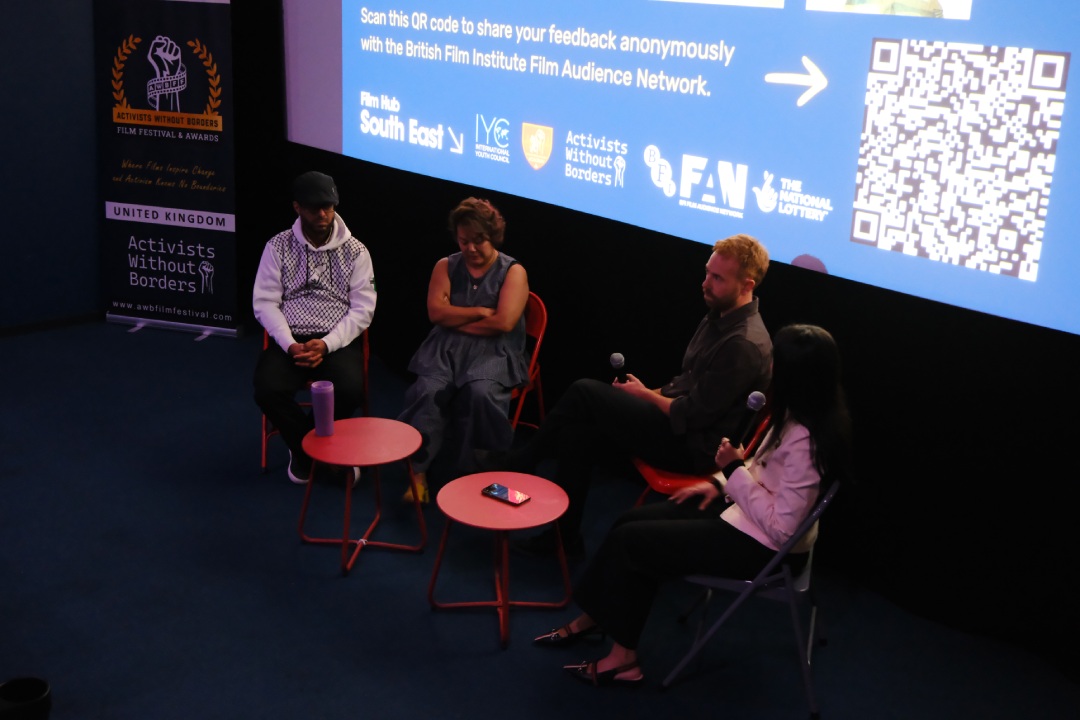
The programme featured short and feature-length documentaries and dramas from filmmakers around the world. Each screening was followed by a discussion, giving audiences the opportunity to hear directly from filmmakers and explore the issues raised by their work.
Films from around the world
This year, the festival received just over 200 submissions from 70 countries around the world. The selected programme brought together stories addressing human rights violations, environmental challenges, conflict, displacement and other urgent social issues.
Filmmakers travelled to Reading from Romania, Ireland, Australia, Spain, Brazil, Canada, Austria and the United States, alongside filmmakers from across the UK. Hundreds of people attended over the weekend, including local residents, activists, filmmakers, students and members of the wider community.
Celebrating filmmakers and social impact
The festival concluded on Sunday with the AWBFF 2026 Awards Ceremony, celebrating filmmakers whose work engages with important social, environmental and human rights issues. Alongside the main competitive categories, the festival presented Social Impact Awards, recognising films that raise awareness and encourage meaningful change. A total of 20 filmmakers received awards in person at this year’s festival.
The Best Documentary Award was presented to Lifeline: The War on UNRWA, a film whose executive producers were also involved in the Academy Award-nominated film The Voice of Hind Rajab. The documentary examines the work of UNRWA, the United Nations agency supporting Palestinian refugees, amid funding cuts and politically motivated attacks.
The film was screened alongside Kim: The Long Way Home, a documentary produced by the British Red Cross, follows Kim and her family’s escape from war-torn Vietnam to Britain in the 1980s, exploring how exile and hostility shaped a lifelong commitment to justice and compassion. Together, the films prompted discussions about humanity in action across borders and generations, and the importance of supporting those working to help others.
A Social Impact Award was also presented to Brazilian journalist Dom Phillips’s wife, Alessandra Sampaio, in recognition of the story behind Missing in the Amazon: The Search for Dom and Bruno, directed by BAFTA-winning filmmaker James Rogan, who attended the festival. The documentary explores the disappearance of Phillips and Brazilian Indigenous expert Bruno Pereira in the Amazon, and the efforts of their loved ones to uncover the truth. Their search for answers helped inspire a global movement for justice and brought renewed attention to the dangers facing those who defend the Amazon and its Indigenous communities.
The Best Animation Award went to All We Have, by Palestinian filmmakers Mahmoud Ghalwa and Amer Hilehal, while the Best Short Drama Award was presented to Nur, a film from the Democratic Republic of the Congo produced by Bridgeway Foundation.
The programme also featured films exploring homelessness and poverty in the UK, deforestation in the Amazon, the experiences of the Tigrayan community and pressing issues affecting communities around the world.
The awards ceremony was attended by Amjad Tarar, Deputy Mayor of Reading Borough Council; Shweta Ghosh, Lecturer in Screen Practices and Industries at the University of Reading; and local community leaders, activists, filmmakers and members of the film industry.
Supporting film as a catalyst for change
AWBFF 2026 was organised by Activists Without Borders, with support from Film Hub South East and International Youth Council. The festival also received support from the BFI Film Audience Network, awarding funds from the National Lottery, helping bring the festival and its films to wider audiences.
Through its screenings, awards and filmmaker discussions, the festival created a space for audiences to engage with issues that are often complex, challenging or overlooked, while encouraging dialogue across communities and borders.
Festival Director Baazir Kaleelur Rahman said:
“Throughout history, films have changed policies, shifted perspectives and inspired action across the world. At Activists Without Borders Film Festival, we believe in the power of cinema to amplify global issues, give a voice to the unheard and turn stories into catalysts for meaningful change.”
The festival continues to provide a platform for filmmakers who use cinema to document injustice, share lived experiences and inspire audiences to engage with the issues shaping our world.
Looking ahead to 2027
Submissions for the 2027 Activists Without Borders Film Festival will open in January 2027. Filmmakers from around the world will be invited to submit work exploring human rights, social justice, environmental issues, conflict and other subjects that can contribute to meaningful public discussion.
For the full list of selected films, award winners and photographs from the 2026 festival, visit: https://activistswithoutborders.org.uk/film-festival-2026/

















 News2 years ago

 Itineraries4 years ago

 Events8 years ago

 Shopping3 years ago
 Itineraries7 years ago
You must be logged in to post a comment Login