Residents urged to take extreme care with BBQs, cigarettes and anything that could start a fire
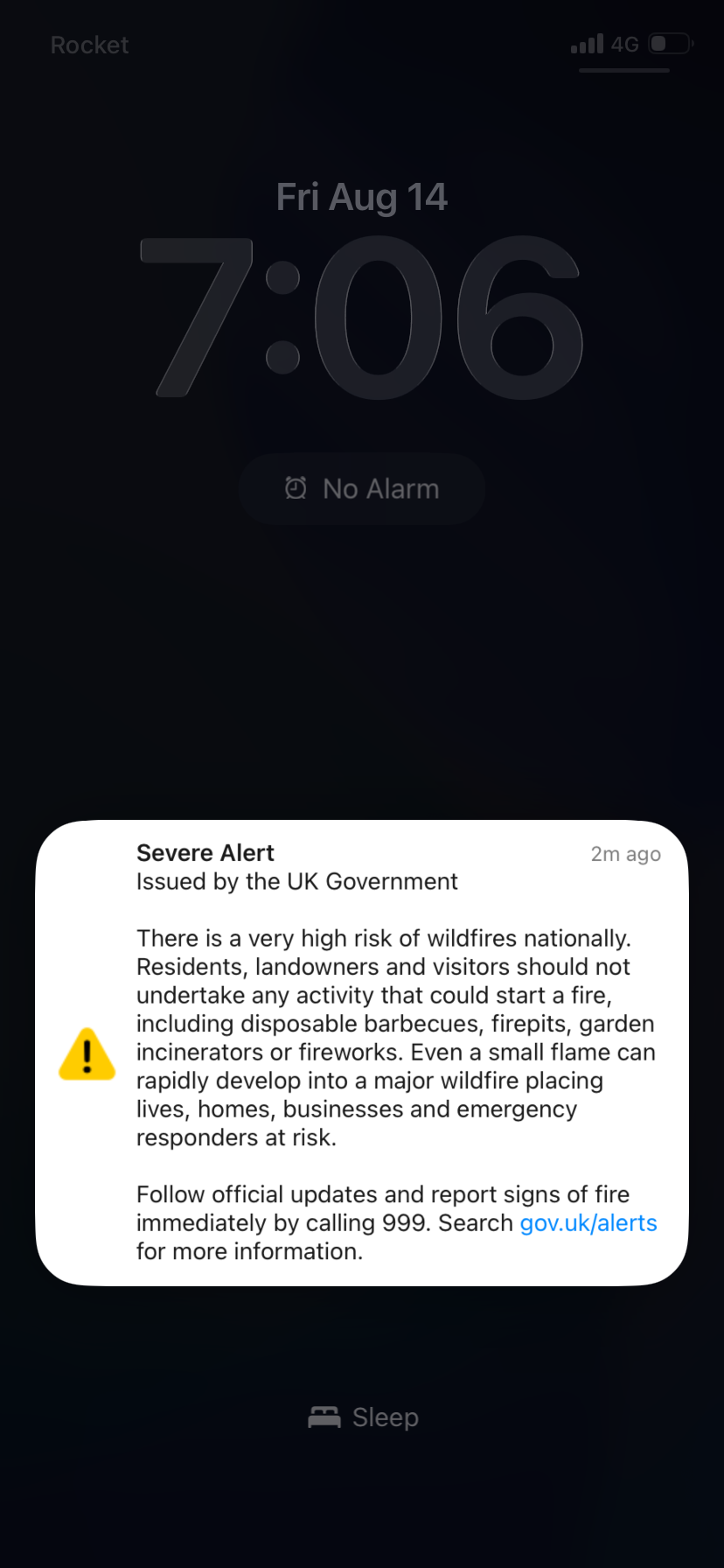
People across parts of South East England had their phones interrupted by an Emergency Alert this evening, warning of the serious risks created by the current heatwave and exceptionally dry conditions.
The alert was sent directly to compatible mobile phones, producing the distinctive loud siren-like sound and vibration used by the UK’s Emergency Alerts system.
This is not an ordinary weather notification. The national Emergency Alerts system is designed to warn people when there is a danger to life, with the message providing information about the emergency and what people should do to protect themselves and others. (Prepare)
Why has the alert been issued?
The South East is experiencing exceptionally hot and dry conditions, creating a combination of extreme heat and heightened wildfire risk.
The UK Health Security Agency has an amber heat-health alert covering the South East, London and several other regions, currently extended until 10am on Saturday 15 August. (GOV.UK)
The concern is not only about people becoming unwell in the heat. Dry grass, vegetation and woodland can ignite extremely easily, allowing fires to spread rapidly.
That is why residents are being urged to think carefully before using anything that creates a naked flame or produces hot embers.
BBQ warning: think twice before lighting one
One of the biggest concerns is the use of disposable BBQs.
A disposable BBQ may look harmless once the food has been cooked, but the charcoal and metal tray can remain extremely hot for a considerable amount of time.
In these conditions, a BBQ left on dry grass, thrown into vegetation or placed next to other combustible material could start a fire.
People should not use disposable BBQs in parks, woodland, heathland, fields or other areas where their use is prohibited or where there is a significant fire risk.
The Government has also introduced a temporary ban on the sale of disposable BBQs across the UK because of the wildfire danger. (Wales Online)
Do not simply throw a BBQ in the bin
Another important message is about disposal.
Never put a hot or warm BBQ into a rubbish bin.
Hot charcoal can remain capable of igniting combustible material long after the visible flames have disappeared. A bin fire can quickly become a much larger incident, particularly during periods of extreme heat and dry weather.
Do not assume that a BBQ is safe just because it no longer has flames.
Allow it to become completely cold and follow local disposal guidance. If you are unsure, do not take the risk.
And never bury a hot disposable BBQ in sand or soil. Someone else could later step on the hot material and suffer serious burns, while buried embers can also remain a fire hazard.
Cigarettes and other sources of ignition
The warning extends beyond BBQs.
A cigarette end thrown onto dry grass can potentially start a fire. So can a campfire, fire pit, fireworks, glass or other objects that create or concentrate heat.
During these exceptionally dry conditions, people should avoid anything that could accidentally ignite vegetation.
If you see a fire starting in open land, move away from the area and report it to the emergency services when it is safe to do so. Do not put yourself at risk trying to tackle a rapidly spreading fire.
The heat itself can also be dangerous
The Emergency Alert comes as health authorities continue to warn about the effects of extreme temperatures.
People are being advised to:
- Drink plenty of water and other fluids.
- Stay out of direct sunlight during the hottest part of the day.
- Keep homes as cool as possible.
- Avoid strenuous exercise during the hottest hours.
- Check on elderly or vulnerable relatives, friends and neighbours.
- Never leave children or animals in parked vehicles.
Symptoms of heat exhaustion can include heavy sweating, dizziness, weakness, headache and nausea.
Confusion, loss of consciousness or a seizure can indicate heatstroke, which is a medical emergency.
Take tonight’s alert seriously
Receiving an Emergency Alert on a phone can be unsettling, particularly when it arrives unexpectedly in the evening.
But the purpose of the system is precisely to make sure people receive an urgent warning when authorities believe there is a significant threat to life.
The message should be read carefully and the instructions followed.
For people across the South East tonight, the wider message is straightforward:
Stay cool. Stay safe. Avoid unnecessary outdoor flames. Do not use BBQs where they are prohibited or unsafe. Never leave hot charcoal behind, and never put a hot BBQ into a bin.
With the ground exceptionally dry, what might normally be considered a small and manageable source of heat can become the starting point for a serious wildfire















 News3 years ago
 News2 years ago

 Itineraries4 years ago

 Events7 years ago
 Shopping3 years ago
 Itineraries7 years ago
You must be logged in to post a comment Login