Connect with us

News

Free Schools? | Nothing in life is free!

Published

on

No free schools

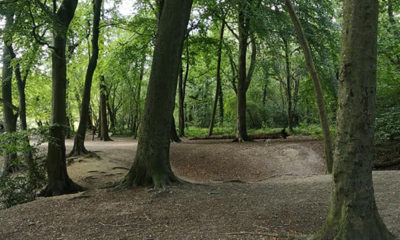
After over 2000 Caversham residents signed a petition against free school location at Albert Road Park, this article came to my mind. Do we need a Free School?

Free schools are ‘additional schools’ and were set up in the Academies Act 2010. Free schools are brand new schools which are additional to schools planned and provided for in a local authority area. A free school can be set up by any suitable proposer where there is evidence of parental demand such as a petition or declaration from interested parents. The proposer could be a charity, an academy sponsor, a university, an independent school, a faith group or an edu-business. Free schools will have the same freedoms as academies. Free schools may be run for profit by private companies.
“For example I admire the sentiments behind some of the faith organisations creating Free Schools, however, I suspect that just because you say that a school is open to everyone in reality it will be known as a school devoted to a particular faith and remain closed to those of different faiths and none.”

I have five reservations about free schools.

  1. Free schools undermine local democracy
  2. Funding for free schools will damage funding to other schools
  3. Choice and competition are ideological obsessions, they don’t raise standards but widen inequalities
  4. Free schools could lead to school closures
  5. Free schools lead directly to privatization and education being run by private, profit-making companies

The creation of ‘free schools’ (known as ‘additional schools’ in the Academies Act 2010) are inevitably going to damage the educational provision of other local schools if they attract pupils from them The more academies and free schools you create the less maintained schools get. This creates a two tier school system of the haves and the have not’s, those that can afford to travel to a ‘choice’ school and those that cannot, not very fair or equitable.

It is now almost universally agreed that Finland has the best education system in Europe. Its school system reaches the ideal – it produces both the highest standards and the best equity. There is no competition at all within the Finnish school system. Why is the government not aspiring to this and learning the lessons? Why are they trying to implement policies that have failed in other countries? Is it a case of ideology over evidence and pragmatism?

Continue Reading

News

Thames Water Hosepipe Ban Comes Into Force Today Across Berkshire and Reading

Published

on

By

READING, Berkshire – Millions of Thames Water customers, including households and businesses across Reading and the wider Berkshire area, are now officially subject to a hosepipe ban that came into force at 12:01am today (23 July) following one of the driest and hottest periods England has experienced in decades.

The restrictions, officially known as a Temporary Use Ban (TUB), affect customers whose water supply is provided by Thames Water across London, the Thames Valley and surrounding counties, including much of Berkshire.

Thames Water says the decision was made after months of exceptionally low rainfall, record-breaking temperatures and soaring customer demand left rivers, reservoirs and groundwater levels under severe pressure. The company reported water demand reaching around 10% above normal across the Thames Valley during recent heatwaves.

What the hosepipe ban means

From today, customers are prohibited from using a hosepipe for a range of non-essential activities, including:

  • Watering gardens, lawns and allotments.
  • Filling paddling pools, swimming pools and hot tubs.
  • Washing private cars with a hosepipe.
  • Cleaning patios, driveways, paths and walls.
  • Using pressure washers for outdoor cleaning.
  • Operating sprinklers or automatic irrigation systems.

However, residents can still:

  • Water plants using a watering can.
  • Use water collected in water butts.
  • Wash vehicles using a bucket and sponge.
  • Reuse household greywater, such as cooled cooking water, to water plants.

Are there any exemptions?

Yes. Thames Water has confirmed that exemptions remain for certain customers and activities, including:

  • People registered for Priority Services due to medical conditions or disabilities.
  • Animal welfare, including pets, livestock and fish.
  • Watering food crops.
  • Certain newly planted trees and plants.
  • Some commercial and essential business activities.

Why has the ban been introduced?

Despite a wetter winter, spring rainfall across the Thames Water region was only around 40% of normal levels, while repeated heatwaves have dramatically increased water consumption.

The National Drought Group has warned that large parts of England are now experiencing “prolonged dry weather”, the stage immediately before an official drought declaration. Several regions are already approaching drought status as reservoir levels continue to fall.

Thames Water says introducing a hosepipe ban was a last resort after working to maintain supplies throughout the recent hot weather.

Could you be fined?

Yes. Customers who deliberately ignore the restrictions could face enforcement action. Under the Water Industry Act, those found breaching a Temporary Use Ban may receive fines of up to £1,000, although water companies generally focus on education before taking formal action.

Growing pressure on water companies

The restrictions have reignited debate over the UK’s ageing water infrastructure. Critics have questioned why customers are being asked to conserve water while billions of litres continue to be lost through leakage each day.

Recent public polling suggests many people believe water companies should do more to repair leaks and improve long-term resilience before imposing restrictions on customers. Thames Water says it continues investing in reducing leakage while asking households to help protect supplies during the current dry spell.

Reading residents urged to save water

For residents across Reading and Berkshire, the message is clear: every litre counts.

Simple actions such as taking shorter showers, turning off taps while brushing teeth, using watering cans instead of hoses and collecting rainwater can help reduce demand while protecting local water supplies during the ongoing dry weather.

Thames Water says the restrictions will remain in place until water resources recover sufficiently, with no end date currently confirmed.

Continue Reading

News

Reading Has Over 1,400 Empty Homes as Council Strategy Nears Expiry

Published

on

By

Liberal Democrat Councillors in Reading are calling on the Labour-controlled Council to urgently refresh its Empty Homes Strategy, after new Government figures revealed that more than 1,400 properties in the borough are sitting outside the housing market — and with no public sign that a successor strategy is being planned.

Data from the Government’s Council Taxbase statistics, collected in October 2025 and published in January 2026 — the most recent available — shows that Reading has 1,162 empty and unfurnished properties, of which 474 have been vacant for more than a year. A further 285 properties are registered as second homes. Ten properties have been empty for more than a decade.

Reading Borough Council’s current Empty Homes Strategy runs until the end of 2026. When it was adopted, it set a target of bringing just 30 long-term empty homes back into use each year — a figure that looks increasingly inadequate against the scale of the problem. There is no public announcement, committee paper, or Council plan reference indicating that a refresh or successor strategy is in preparation.

The Council Plan 2025–2028, published earlier this year, sets out ambitions for new housebuilding and acquisitions but makes no specific mention of empty homes. The strategy appears set to expire quietly, with nothing to replace it.

Cllr Meri O’Connell, Liberal Democrat Councillor for Tilehurst Ward, said:

“Reading has over 1,400 homes sitting empty or unused, including ten that have been vacant for more than a decade. At the same time, families are on housing waiting lists, rough sleeping is a persistent problem, and young people cannot afford to rent or buy in this town. The Council’s strategy to tackle this runs out at the end of this year; the target it set — 30 homes a year — was never ambitious enough, and there is no sign whatsoever that a replacement is coming. That is simply not good enough.”

The call is backed by Citizens UK Reading, whose recent Accountability Assembly called on Council leaders to refresh, renew, and reinvigorate the Empty Homes Strategy as a matter of urgency.

Reading’s Liberal Democrats are calling on the Council to:

  • Commit publicly to a refreshed Empty Homes Strategy before the current one expires at the end of 2026, with meaningful targets and genuine accountability
  • Ringfence empty homes premium revenue — estimated to raise over £1.18 million per year — for active work to bring properties back into use, rather than absorbing it into the general fund
  • Publish an annual update on empty homes in Reading, broken down by ward
  • Use Empty Dwelling Management Order powers more actively for properties that have been vacant for five years or more
  • Explore loans and leasing schemes to support private owners to bring empty homes back into use, going beyond the Council’s existing acquisitions programme

Continue Reading

News

Calls Grow to Phase Out Glyphosate in Reading as Councils Across the UK Rethink Weedkiller Use

Published

on

By

Reading Borough Council is facing renewed calls to reduce and eventually phase out the use of glyphosate – the UK’s most widely used weedkiller – as environmental campaigners and councillors push for greener alternatives.

The debate has gathered momentum across the country, with more than 100 local authorities either ending or significantly reducing their use of glyphosate in public spaces, while others are considering similar measures as concerns grow over its potential impact on public health and biodiversity.

What is glyphosate?

Glyphosate is a herbicide commonly used by councils, farmers and landowners to control weeds on pavements, roads, parks, cemeteries and other public spaces. It has long been regarded as one of the most effective and cost-efficient ways to manage unwanted vegetation.

However, its continued use remains controversial.

In 2015, the World Health Organization’s International Agency for Research on Cancer (IARC) classified glyphosate as “probably carcinogenic to humans”. At the same time, UK and European regulators have maintained that glyphosate can continue to be used safely when applied according to approved guidelines.

That difference in scientific opinion has fuelled an ongoing national debate.

Reading under pressure

In Reading, campaigners and opposition councillors are urging the council to move away from routine glyphosate spraying, particularly in parks, playgrounds and residential streets.

The issue has become increasingly political, with calls for Reading Borough Council to commit to a timetable for phasing out glyphosate and trialling alternative methods of weed control.

The council has previously said it has already reduced glyphosate use by around 25 per cent and now follows an integrated weed management approach, using targeted applications only where necessary while exploring ways to reduce reliance on chemical treatments.

Why are people concerned?

Environmental groups say glyphosate may contribute to:

  • Loss of wildflowers and natural habitats.
  • Declining bee and butterfly populations.
  • Reduced biodiversity in urban areas.
  • Chemical runoff into rivers and streams.

Campaigners also believe reducing herbicide use would help create more wildlife-friendly public spaces while lowering residents’ exposure to chemical weedkillers.

Why doesn’t the council simply stop using it?

While many residents support a ban, councils face significant practical challenges.

Removing weeds without glyphosate often requires:

  • More manual labour.
  • Specialist hot foam or steam treatment equipment.
  • More frequent maintenance visits.
  • Higher operating costs.

There are also safety concerns. Weeds growing through pavements can create trip hazards, damage road surfaces and block drains if left untreated.

For many councils, glyphosate remains the quickest and most affordable option for keeping public spaces safe and accessible.

A wider national debate

The issue extends far beyond Reading.

Across Berkshire and the rest of the UK, local authorities are reviewing their weed management policies ahead of the UK Government’s review of glyphosate’s future approval.

Several councils have already committed to phased reductions, while others are trialling alternative methods before deciding whether a full ban is practical. West Berkshire Council is also set to debate proposals to phase out glyphosate over the next two years, reflecting the growing national conversation around pesticide use in public spaces.

What happens next?

For now, Reading Borough Council continues to use glyphosate in a limited and targeted way while investigating alternatives.

Whether the town eventually joins the growing number of councils moving away from chemical weed control is likely to depend on future Government guidance, the success of alternative weed management methods and the financial implications for local taxpayers.

As environmental concerns continue to grow and more councils reassess their policies, the debate over glyphosate is unlikely to disappear anytime soon.

Continue Reading

Trending

Copyright © 2025 Reading west.