Connect with us

News

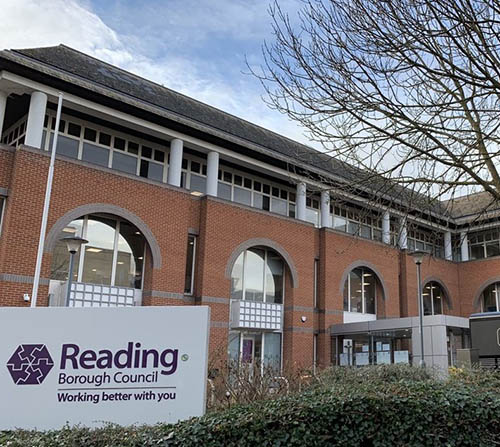
Ombudsman tells Reading Borough Council to apologise to woman with visual impairments

Published

on

A complaint that was submitted by Reading Voice, the advocacy service that Healthwatch Reading runs for local people, on behalf of a woman with visual impairments against Reading Borough Council, has been partly upheld by the Local Government Ombudsman.

The woman, who also had mental health needs, was dissatisfied with the council’s response regarding her care, which in our opinion and after read the Ombudsman summary, was appalling to say the least.

In its decision published on 18 March 2020, the Local Government & Social Care Ombudsman (LGO) partly upheld the complaint. The decision states: ‘The Council identified the need for help with medication but did not provide that help seven days a week. That was fault by the Council. It resulted in the incident on 25 August 2018. Although taking her medication too early did not cause physical harm to Ms X, it caused her much distress. That is an injustice which warrants an apology and financial redress.’

The council has agreed to the LGO’s recommendations to apologise to the woman, waive £200 of her outstanding care charges and to make sure staff ‘update care and support plans whenever they make changes to the care being delivered’.

Reading Boroughe Council has agreed to take the action recommended by the LGO.

Clikc here to see what happened

Continue Reading

News

Reading Crime: Do the Latest Figures Tell the Full Story?

Published

on

By

pexels-cottonbro-7121056-1080px

Recent crime figures published by Thames Valley Police and Crime Commissioner (PCC) Matthew Barber highlight reductions in several key offences, including knife crime, vehicle theft and shoplifting. However, a closer look at the data reveals a more mixed picture, with anti-social behaviour and overall demand on the force both increasing.

The PCC’s Annual Report 2025/26 states that Thames Valley Police has made progress in tackling a number of priority crimes. But the same report also shows that reports of anti-social behaviour increased from 7,232 to 9,565 incidents over the past year – a rise of 32% across the Thames Valley.

The report also records a 7% increase in overall incidents, with Thames Valley Police responding to more than 500,000 incidents during the year. Demand on the force has also grown, with 999 emergency calls increasing by 4%.

Reading remains above the regional average

While the PCC’s report focuses on force-wide performance, publicly available crime data from Police.uk and the Office for National Statistics (ONS) indicates that Reading continues to record a higher crime rate than the Thames Valley average. Robbery offences have also shown an upward trend locally over the past three years.

Violence against the person also increased by 1% across Thames Valley, according to the annual report, while national figures showed a 1% decrease over the same period.

Independent inspectors identify areas for improvement

The latest HM Inspectorate of Constabulary and Fire & Rescue Services (HMICFRS) PEEL inspection, published this week, found that Thames Valley Police continues to perform well in several areas, including neighbourhood policing and crime prevention.

However, inspectors also identified weaknesses in crime investigations and safeguarding vulnerable people, concluding that further improvements are needed in these areas.

Responding to the inspection, PCC Matthew Barber acknowledged that improvements are still required and said financial pressures mean difficult decisions must be made about where resources are allocated.

Serious crime challenges remain

The PCC’s annual report also shows the force achieved a 10.6% charge rate for rape and sexual offences, meaning around one in ten recorded cases resulted in a charge during the reporting period.

Meanwhile, Government funding for victim support services fell by 4.2%, placing additional pressure on organisations supporting victims across the Thames Valley.

A mixed picture

Taken together, the latest figures suggest that while Thames Valley Police has achieved reductions in some headline crime categories, other indicators point to increasing demand and continuing challenges.

The rise in anti-social behaviour, higher incident volumes, findings from the independent HMICFRS inspection and Reading’s above-average crime rate indicate that public safety across the area remains a complex picture rather than one defined solely by falling crime statistics.

Sources: Thames Valley Police and Crime Commissioner Annual Report 2025/26, HMICFRS PEEL Inspection 2025/26, Police.uk crime data, and the Office for National Statistics (ONS).

Continue Reading

News

Thames Water Hosepipe Ban Comes Into Force Today Across Berkshire and Reading

Published

on

By

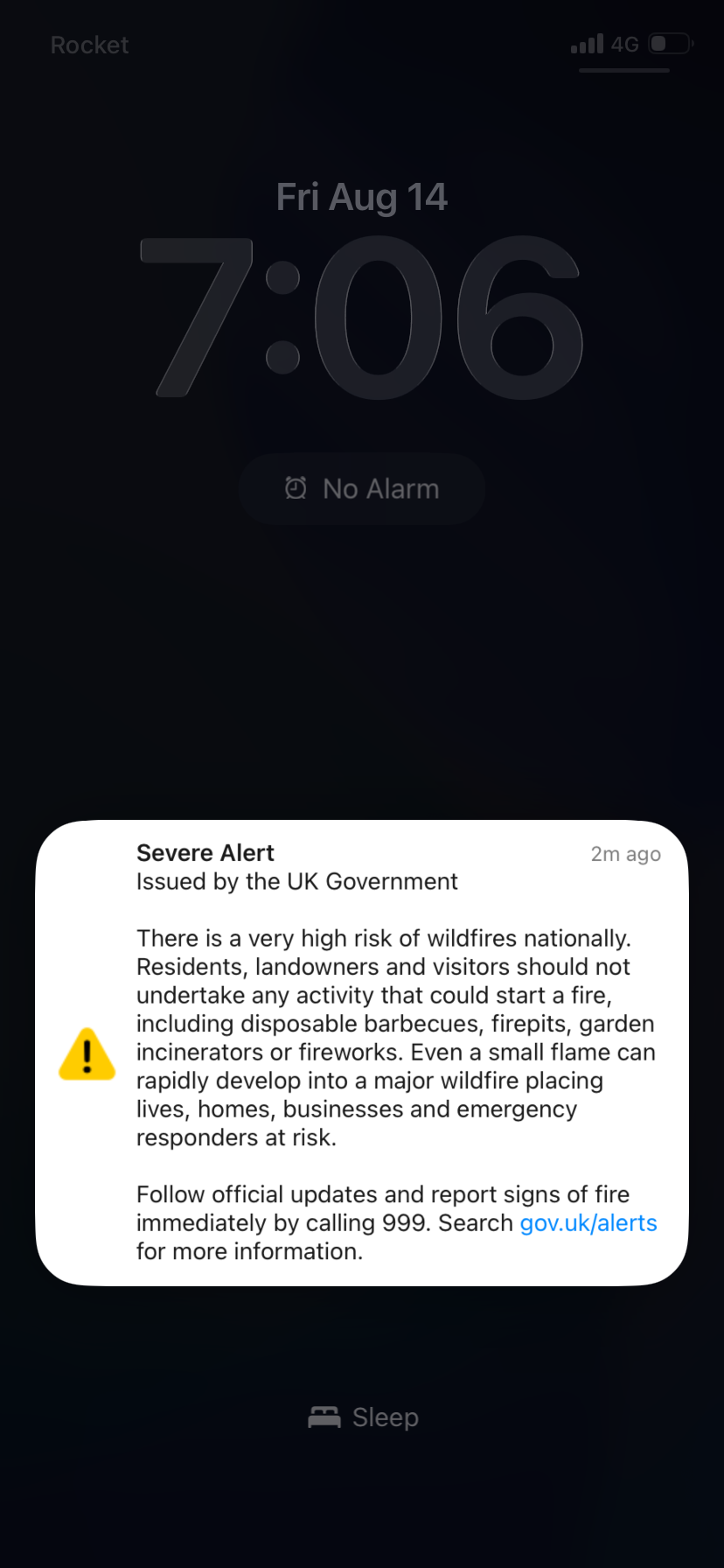
READING, Berkshire – Millions of Thames Water customers, including households and businesses across Reading and the wider Berkshire area, are now officially subject to a hosepipe ban that came into force at 12:01am today (23 July) following one of the driest and hottest periods England has experienced in decades.

The restrictions, officially known as a Temporary Use Ban (TUB), affect customers whose water supply is provided by Thames Water across London, the Thames Valley and surrounding counties, including much of Berkshire.

Thames Water says the decision was made after months of exceptionally low rainfall, record-breaking temperatures and soaring customer demand left rivers, reservoirs and groundwater levels under severe pressure. The company reported water demand reaching around 10% above normal across the Thames Valley during recent heatwaves.

What the hosepipe ban means

From today, customers are prohibited from using a hosepipe for a range of non-essential activities, including:

  • Watering gardens, lawns and allotments.
  • Filling paddling pools, swimming pools and hot tubs.
  • Washing private cars with a hosepipe.
  • Cleaning patios, driveways, paths and walls.
  • Using pressure washers for outdoor cleaning.
  • Operating sprinklers or automatic irrigation systems.

However, residents can still:

  • Water plants using a watering can.
  • Use water collected in water butts.
  • Wash vehicles using a bucket and sponge.
  • Reuse household greywater, such as cooled cooking water, to water plants.

Are there any exemptions?

Yes. Thames Water has confirmed that exemptions remain for certain customers and activities, including:

  • People registered for Priority Services due to medical conditions or disabilities.
  • Animal welfare, including pets, livestock and fish.
  • Watering food crops.
  • Certain newly planted trees and plants.
  • Some commercial and essential business activities.

Why has the ban been introduced?

Despite a wetter winter, spring rainfall across the Thames Water region was only around 40% of normal levels, while repeated heatwaves have dramatically increased water consumption.

The National Drought Group has warned that large parts of England are now experiencing “prolonged dry weather”, the stage immediately before an official drought declaration. Several regions are already approaching drought status as reservoir levels continue to fall.

Thames Water says introducing a hosepipe ban was a last resort after working to maintain supplies throughout the recent hot weather.

Could you be fined?

Yes. Customers who deliberately ignore the restrictions could face enforcement action. Under the Water Industry Act, those found breaching a Temporary Use Ban may receive fines of up to £1,000, although water companies generally focus on education before taking formal action.

Growing pressure on water companies

The restrictions have reignited debate over the UK’s ageing water infrastructure. Critics have questioned why customers are being asked to conserve water while billions of litres continue to be lost through leakage each day.

Recent public polling suggests many people believe water companies should do more to repair leaks and improve long-term resilience before imposing restrictions on customers. Thames Water says it continues investing in reducing leakage while asking households to help protect supplies during the current dry spell.

Reading residents urged to save water

For residents across Reading and Berkshire, the message is clear: every litre counts.

Simple actions such as taking shorter showers, turning off taps while brushing teeth, using watering cans instead of hoses and collecting rainwater can help reduce demand while protecting local water supplies during the ongoing dry weather.

Thames Water says the restrictions will remain in place until water resources recover sufficiently, with no end date currently confirmed.

Continue Reading

News

Reading Has Over 1,400 Empty Homes as Council Strategy Nears Expiry

Published

on

By

Liberal Democrat Councillors in Reading are calling on the Labour-controlled Council to urgently refresh its Empty Homes Strategy, after new Government figures revealed that more than 1,400 properties in the borough are sitting outside the housing market — and with no public sign that a successor strategy is being planned.

Data from the Government’s Council Taxbase statistics, collected in October 2025 and published in January 2026 — the most recent available — shows that Reading has 1,162 empty and unfurnished properties, of which 474 have been vacant for more than a year. A further 285 properties are registered as second homes. Ten properties have been empty for more than a decade.

Reading Borough Council’s current Empty Homes Strategy runs until the end of 2026. When it was adopted, it set a target of bringing just 30 long-term empty homes back into use each year — a figure that looks increasingly inadequate against the scale of the problem. There is no public announcement, committee paper, or Council plan reference indicating that a refresh or successor strategy is in preparation.

The Council Plan 2025–2028, published earlier this year, sets out ambitions for new housebuilding and acquisitions but makes no specific mention of empty homes. The strategy appears set to expire quietly, with nothing to replace it.

Cllr Meri O’Connell, Liberal Democrat Councillor for Tilehurst Ward, said:

“Reading has over 1,400 homes sitting empty or unused, including ten that have been vacant for more than a decade. At the same time, families are on housing waiting lists, rough sleeping is a persistent problem, and young people cannot afford to rent or buy in this town. The Council’s strategy to tackle this runs out at the end of this year; the target it set — 30 homes a year — was never ambitious enough, and there is no sign whatsoever that a replacement is coming. That is simply not good enough.”

The call is backed by Citizens UK Reading, whose recent Accountability Assembly called on Council leaders to refresh, renew, and reinvigorate the Empty Homes Strategy as a matter of urgency.

Reading’s Liberal Democrats are calling on the Council to:

  • Commit publicly to a refreshed Empty Homes Strategy before the current one expires at the end of 2026, with meaningful targets and genuine accountability
  • Ringfence empty homes premium revenue — estimated to raise over £1.18 million per year — for active work to bring properties back into use, rather than absorbing it into the general fund
  • Publish an annual update on empty homes in Reading, broken down by ward
  • Use Empty Dwelling Management Order powers more actively for properties that have been vacant for five years or more
  • Explore loans and leasing schemes to support private owners to bring empty homes back into use, going beyond the Council’s existing acquisitions programme

Continue Reading

Trending

Copyright © 2025 Reading west.