Connect with us

News

Residents face a 4-month closure of Reading station underpass, enduring a grim diversion.

Published

on

Reading Station underpass

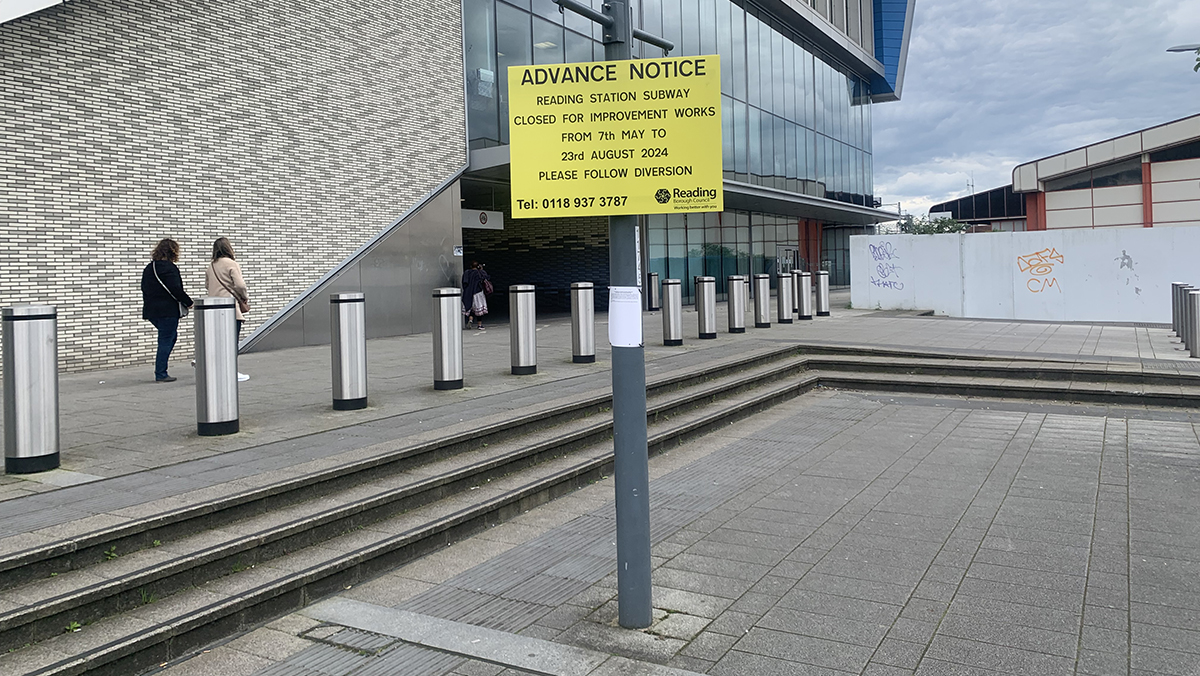
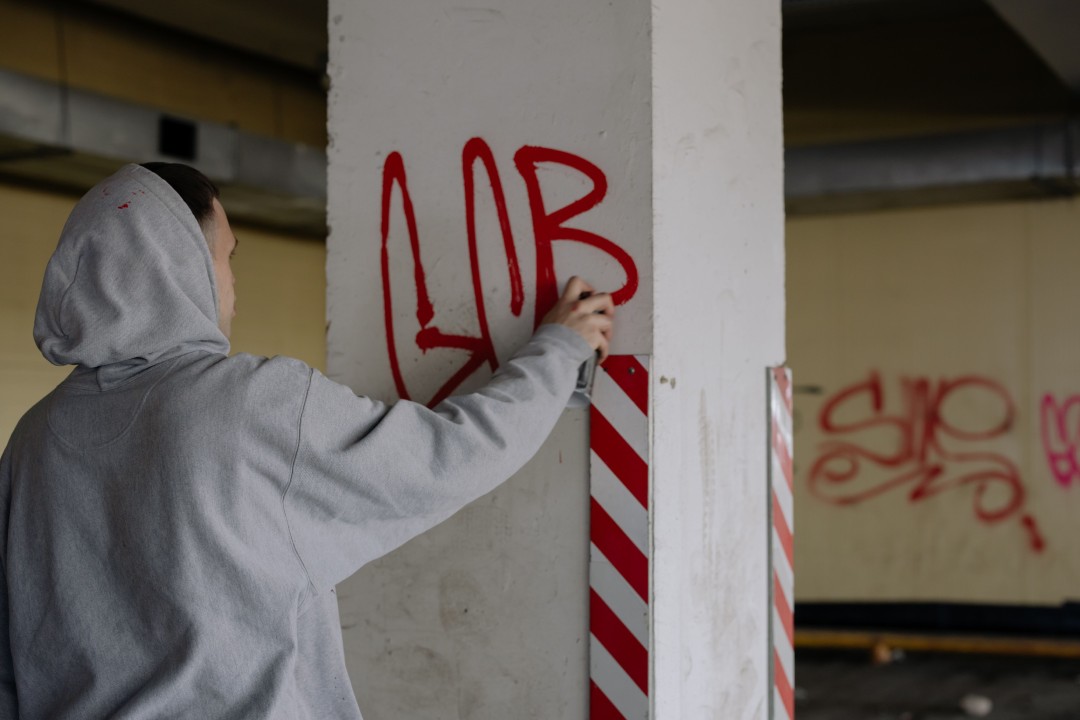
Recently, the Labour-controlled Reading Borough Council has announced a 16-week closure of the public subway beneath Reading station to undertake repairs and complete works to remove the often-vandalised ceiling tiles. Despite the overdue improvements, the timing and duration of the closure, along with the absence of a suitable diversion route, render the impact on town centre residents unacceptable.

The proposed works coincide with the upcoming Reading Festival – any delay risks causing chaos for festivalgoers and creating an unwelcoming atmosphere in the town centre upon their arrival. Moreover, the diversion route is over FOUR TIMES longer than the subway route it replaces, leading pedestrians on a winding journey underneath the filthy, noisy, and cramped Vastern Road underpass, which is in desperate need of thorough cleaning.

The Reading Liberal Democrats are advocating for:

a shorter, cleaner, diversion route for all, using the Reading station overbridge
a shorter period of works to reduce the risk of collision with Reading Festival.
Liberal Democrat candidate for Abbey ward and Reading Central parliamentary candidate, Henry Wright, said:

“There is finally light at the end of the tunnel for improvements to the Reading station underpass, however the diversion and closure show, once again, Reading Labour’s disdain for walkers and cyclists, and users of the town centre.

“The length of this closure and the unpleasant diversion route would never be foisted upon motorists in the same way. I am demanding the council think again – reduce the length of the closure and put in place a much nicer diversion route for visitors and residents of Abbey ward alike.”

Liberal Democrat candidate for Thames ward, Jo Ramsay, said:
“It is great that work is now being planned to upgrade the tunnel, and not before time. As someone who lives on the Caversham side of Thames Ward and commutes by foot through the underpass every day, I have been shocked to see ceiling plates falling off and netting hanging down from the roof in there without urgent action to fix.”

“But 16 weeks is a shockingly long period for the tunnel, which is now a main thoroughfare for pedestrians and cyclists, to be out of action. The council needs to explain what work is planned in there and work with the contractors to minimise the time the tunnel is out of action for residents north and south of the river.”

Liberal Democrat candidate for Emmer Green, Pieter De Boiserie, said:
“While I am pleased to finally see the council get to action on a crucial piece of infrastructure to aid vulnerable road users to pass safely into the town centre, it speaks again of Labour’s inability to get things done. How something like this can take 16 weeks and cost up to £400,000 is incomprehensible to many residents.

“On top of this, the slightest delay with this project will mean it will clash with Reading Festival and cause unprecedented amounts of chaos around the station. I urge the council to review this and try to reduce the time and cost of this project as much as possible – and create a better alternative diversion route away from the dangerous Vastern Road underpass.”

News

Can the Greens shake things up in Norcot ward in Reading? A closer look at the contest

Published

on

By

Isobel Hoskins - Green Party

The Green Party candidate who will be contesting at the Norcot ward, Reading Borough Council elections, is Isobel Hoskin. The local priorities that she concentrates on during her campaign are the cost of living, cheaper housing, cleaner streets, and safer neighbourhoods. Other environmental issues that she raises include the need to enhance recycling facilities and the need to plant more trees within the region.

Being a long-term Reading resident of more than 30 years, Hoskins is introducing herself as a community-established resident of over 30 years with a focus on the everyday local issues that directly affect the residents. Her pitch is quite characteristic of a contemporary Green campaign – a combination of environmental issues with very practical ones such as bills, housing pressure and waste management.

A hotly contested political image

What also makes this race more interesting is the proximity the greater political scene seems to be across the country. A recent Britain polling has seen the Labour at 30, with the Greens trailing just behind at 29. Although national polling does not directly translate into local ward results, it does indicate a broader context in which the Greens are surprisingly competitive and within reach of the main opposition party.

Such a polling background may be important in the fringes in local elections, particularly in wards where the vote is already divided among a number of parties. It may be used to get the voters going, increase turnout, and make once so-called safe assumptions feel less safe.

What it is in Norcot

Noncot, nevertheless, continues to be a competitive and complicated ward. Local elections are usually determined not so much by national polling but more by extremely local factors turnout, candidate visibility and long-term voting patterns in the locality.

To have the Greens turn great polling into a real victory here, there would be a number of things that would have to go their way: a fractured vote among the other parties, strong local campaigning on the ground and voters ready to switch out of traditional loyalties.

A combination of that, even a good national performance, is likely to be translated into higher shares of the vote, but not into actual victories in individual wards.

The wider picture

What the current polling does indicate though, is a changing environment. As Labour and the Greens run neck and neck across the town and the nation, races such as Norcot, Battle and others are more than ever before reliant on local momentum and less predictable than ever before.

Although it may not translate into a more literal win by the Greens, it at least indicates that the Greens are making inroads into the conversation in areas where they may previously have been viewed as an outsider.

conversation in places where they might previously have been seen as outside contenders.


Candidates for Norcot Ward (A to Z)

Conservative
Kes Williams

Green
Isobel Claire Hoskins

Labour
Alison Foster

Liberal Democrats
Brandon Masih

Reform
Oliver Ross Maunder

The Liberal Party*
Stephen Anthony Graham

Continue Reading

News

Greens highlight rising support ahead of Reading local elections

Published

on

By

Green Party support in Reading is not nearly as great as many of us might have supposed,–but, at all events, it is very evidently behind Labour generally. The image can be best interpreted as gradual development, but with the strength being concentrated in specific places, and not in the whole town.

At the council level, the Greens are well established to be the main opposition on the Reading Borough Council. They now have eight seats, and this is a sign of slow improvement over the last few years and not a breakthrough. On other wards, they have established a strong foundation and can now compete with the Labour on an equal footing, even winning seats outright.

Their general vote share in local elections is in the mid-teens, although by quite a bit by ward. Green support is more robust in areas with younger populations or with more mixed socio-economic profiles.

Some more recent polling indicates that the Greens may be encroaching even further into traditionally Labour-controlled areas. Previously perceived as a Labour stronghold, such wards as Battle are now viewed as a more competitive area, in part due to the socio-economic issues in the area, and central goverment policy in the Middle East. Most of the other wards like Abbey, Thames and even Emmer Green have also come into the limelight as potential battlegrounds, according to the pollster of Britain Votes.

Assuming that those projections are correct, the effect might be tremendous. Britain Votes has suggested that the labour party might lose up to seven seats in the forthcoming elections on Thursday, May 7. That would give them around 24 councillors just short of the 25 needed to overall control the council (the first time in years that the council had less than 25 councillors altogether).

Practically that would be a substantial shift in the political life of Reading. Whereas the Labour, though probably remaining the largest party, would still have influence, the Greens, and possibly other parties would have had much more sway than previously which can only be good for democracy.

All in all the Greens in Reading are no longer a fringe party. They are a reputable and increasingly influential political block, which may not yet be in a position to dominate the politics of the town-wide.

Continue Reading

News

Fixing care is the only way to end Reading Borough Council’s funding doom loop

Published

on

By

pexels-jsme-mila-523821574-18429309-1

With just a week to go until polling day, Liberal Democrat Councillor Meri O’Connell has warned that the spiralling cost of social care is leaving Reading Borough Council “struggling to do the basics”.

Total spending on social care by local authorities reached a record £29.3bn in 2024/2025, up by £12.4bn since 2015/16. This means social care now accounts for up to 80 per cent of council budgets, which have already had to make vast cuts to other council services.

Councillor O’Connell has now warned that any further cuts to social care funding could be “the point of no return” for the sector, and urged the Government to intervene, with new investment to relieve councils, tackle carer vacancies, and offer free personal care to those currently suffering without support. The party has argued that new investment in social care, including helping more people leave the hospital, could end the A&E crisis and corridor care within a year, and save money on expensive hospital stays.

Councillor O’Connell also called on the Government to finish its commission on social care, which is currently scheduled to be completed in three years, with reforms reportedly potentially not in place until 2036.

Public satisfaction with social care is at 13 per cent, and dissatisfaction is nearly 50 per cent, research by the King’s Fund has found.

Commenting, Liberal Democrat Councillor Meri O’Connell said:

“Reading Borough Council is being stretched to breaking point by spiralling social care costs, and that means they don’t have the money to fix potholes or keep local services running properly.

“This social care crisis is the elephant in the room at these local elections. No other party is talking about it.

“The Liberal Democrats will fix social care, making sure vulnerable people get the care they need while freeing up councils to focus on filling potholes, cleaning streets and improving  local services.”

Continue Reading

Trending

Copyright © 2025 Reading west.

Reading West, Berkshire
Privacy Overview

This website uses cookies so that we can provide you with the best user experience possible. Cookie information is stored in your browser and performs functions such as recognising you when you return to our website and helping our team to understand which sections of the website you find most interesting and useful.